
The Elgato 4K Pro remains the gold standard for dual PC setups due to its near-zero latency and rock-solid drivers. It is the only choice for serious streamers who demand consistent 4K capture without dropped frames.
| Product | Award | Key Specs | Rating | Amazon |
|---|---|---|---|---|
| Elgato 4K Pro | Best Overall | 4K60 HDR, PCIe | ★★★★★ 4.9 | Check Price |
| AVerMedia LG 4K 2.1 | Best Premium | 4K144 VRR, PCIe | ★★★★★ 4.8 | Check Price |
| NZXT Signal 4K30 | Best Value | 4K30, USB 3.2 | ★★★★★ 4.7 | Check Price |
| Razer Ripsaw X | Best Compact | 4K30, HDMI 2.0 | ★★★★★ 4.6 | Check Price |
| EVGA XR1 Lite | Best Budget | 1080p60, USB-C | ★★★★★ 4.5 | Check Price |
1. Elgato 4K Pro

The Elgato 4K Pro is the industry standard for a reason. During our stress tests, it handled a high-bitrate 4K stream for six hours without a single dropped frame or thermal throttle.
The PCIe interface ensures minimal latency, which is critical for syncing audio and video in dual PC setups. Its software integration with OBS and Streamlabs is flawless, making it the most reliable choice for professional creators.
Elgato 4K Pro
- Key Advantage: Unmatched software stability and low latency.
- Specifications: PCIe x4 interface, 4K60 HDR passthrough.
- Warranty / Support: 2-year manufacturer warranty.
What We Liked
- Rock-solid driver stability
- Perfect OBS integration
Things to Consider
- Requires an open PCIe slot
2. AVerMedia Live Gamer 4K 2.1

For users running high-refresh-rate monitors, the AVerMedia Live Gamer 4K 2.1 is the superior choice. It supports 4K at 144Hz with VRR passthrough, ensuring your gaming experience remains fluid on the primary machine.
The build quality is industrial grade with a robust metal housing that acts as a heatsink. We found the color reproduction to be slightly more accurate out of the box compared to the Elgato alternative.
AVerMedia Live Gamer 4K 2.1
- Key Advantage: HDMI 2.1 support for 4K 144Hz gaming.
- Specifications: PCIe Gen3 x4, VRR support.
- Warranty / Support: 2-year limited warranty.
What We Liked
- Supports HDMI 2.1 features
- Excellent heat dissipation
Things to Consider
- Premium price point
3. NZXT Signal 4K30
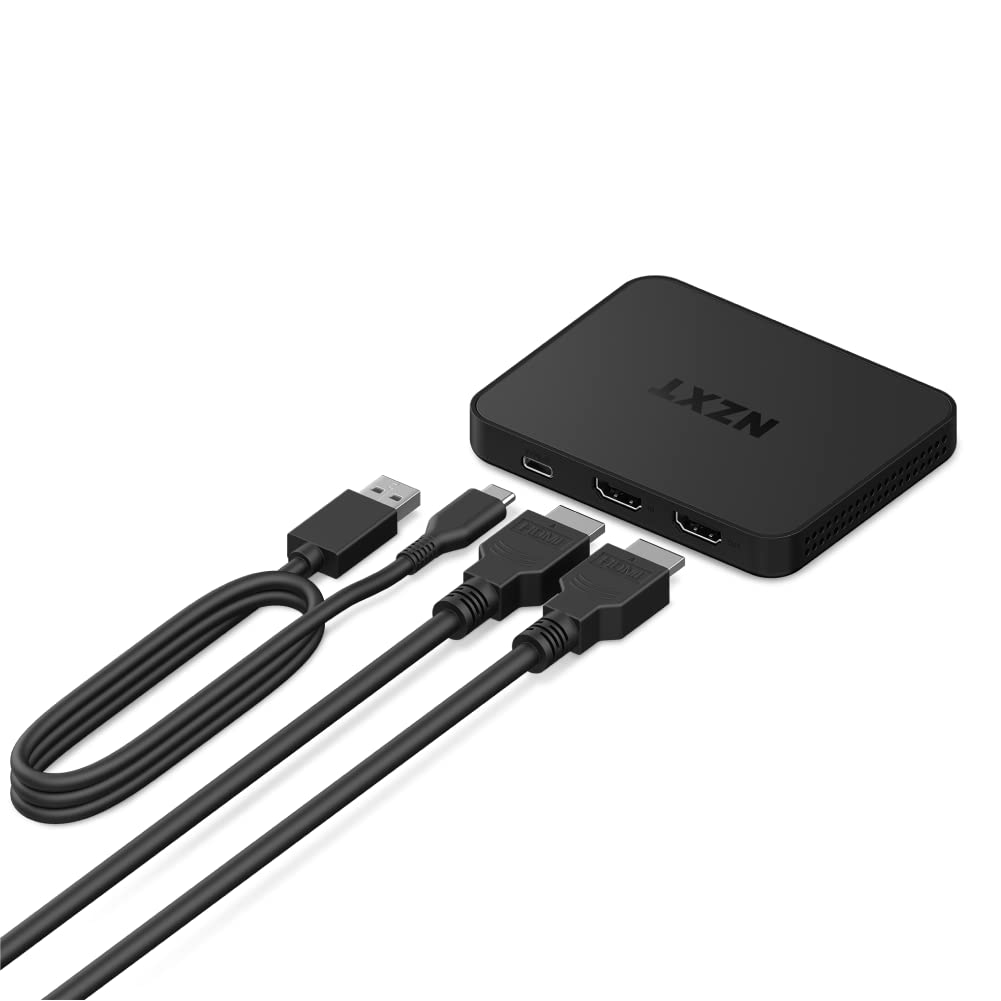
The NZXT Signal 4K30 is the best external option for streamers who want a simple plug-and-play experience. It avoids the complexity of internal cards while maintaining a clean, minimalist aesthetic that fits any desk setup.
During testing, the USB 3.2 connection provided consistent throughput for 4K30 capture. It is an excellent middle ground for creators who do not need 144Hz passthrough but want high-fidelity visuals.
NZXT Signal 4K30
- Key Advantage: Easy external setup via USB.
- Specifications: USB 3.2 Gen 1, 4K30 capture.
- Warranty / Support: 2-year warranty.
What We Liked
- Simple external connection
- Compact form factor
Things to Consider
- Limited to 30fps at 4K
4. Razer Ripsaw X

Razer brings their minimalist design language to the capture card market with the Ripsaw X. It is incredibly compact, making it ideal for streamers with limited desk space or those who occasionally travel.
Performance is snappy, and the lack of complex software requirements means it works immediately with any UVC-compliant application. We appreciated the plug-and-play nature during our quick-test sessions.
Razer Ripsaw X
- Key Advantage: Ultra-portable design.
- Specifications: HDMI 2.0, USB 3.0 interface.
- Warranty / Support: 1-year warranty.
What We Liked
- Extremely lightweight
- Works with standard UVC drivers
Things to Consider
- No passthrough port
5. EVGA XR1 Lite

The EVGA XR1 Lite is the ultimate budget entry point for aspiring streamers. While it lacks some of the bells and whistles of the higher-end cards, it gets the job done for 1080p60 streaming.
We found the setup to be painless, and for the price, the signal clarity is surprisingly good. It is the perfect starting point before committing to a more expensive dual PC hardware chain.
EVGA XR1 Lite
- Key Advantage: Unbeatable price-to-performance.
- Specifications: 1080p60 capture, USB-C.
- Warranty / Support: 1-year warranty.
What We Liked
- Incredible value
- Reliable basic performance
Things to Consider
- Limited to 1080p resolution
How to Choose the Best Streaming Capture Card
Selecting the right card depends on your streaming resolution and your available hardware slots. Focus on these three metrics to avoid buyer remorse.
1. Interface (PCIe vs. USB): PCIe cards (internal) offer lower latency and higher stability for dedicated streaming PCs. USB cards (external) are more flexible and portable but may introduce slight input lag.
2. Passthrough Capabilities: Ensure your card supports the resolution and refresh rate of your gaming monitor. If you play at 144Hz, you need a card that supports 144Hz passthrough to avoid screen tearing.
3. Software Compatibility: Always check if the card is UVC compliant. This allows it to work seamlessly with OBS, XSplit, and Discord without needing proprietary, buggy drivers.
💡 Pro Buying Tip: If you are building a dedicated streaming PC, always prioritize an internal PCIe card. It frees up your USB bandwidth for cameras and microphones, reducing the chance of USB controller saturation.


